Butts Acting Guild Dance Company
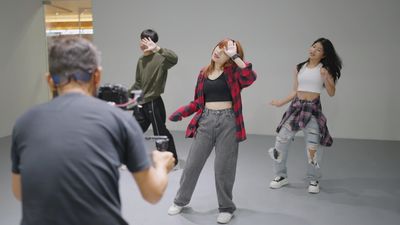
Choreographer
Choreographer’s Duties: Pre-Production to Post-Show
Butts Acting Guild
Pre-Production Duties
1. Meet with Director & Creative Team
• Review the show’s movement style, pacing, and tone.
• Identify all musical numbers requiring choreography or staging movement.
• Determine skill levels of cast and ensemble.
Examples & Best Practices:
• Bring reference videos or movement styles for inspiration.
• Collaborate early with Music Director to align tempo and feel.
• Plan choreography to match the physical space and scenic layout.
2. Create Choreography Concepts
• Develop choreography that supports character personality and storytelling.
• Design movement that is achievable for all cast skill levels.
• Coordinate with Costumes and Props to ensure safe and functional movement.
Examples & Best Practices:
• Use counts and visual markers to simplify learning.
• Provide modified versions for dancers of different abilities.
• Record yourself performing the choreography for teaching reference.
Rehearsal Period
1. Teach Choreography
• Lead dance rehearsals and teach all movement sections.
• Clean formations, spacing, and transitions.
• Adjust choreography to solve spacing or cast challenges.
Examples & Best Practices:
• Break numbers into small segments for teaching efficiency.
• Use floor tape to mark formations clearly.
• Give the cast video recordings to practice at home.
2. Work With Director & SM on Scene Integration
• Ensure choreography fits into blocking and scene transitions.
• Provide timing notes for cues (lights, music, props).
• Update choreography as the show evolves.
Examples & Best Practices:
• Attend run-throughs to identify problem transitions.
• Trim or expand choreography for pacing as needed.
• Pair new dancers with experienced dancers for support.
Technical & Dress Rehearsals
3. Clean & Finalize Choreography
• Confirm lighting, props, and costumes support movement safely.
• Make final adjustments for timing, spacing, and energy.
• Communicate any changes to Stage Management for cue sheets.
Examples & Best Practices:
• Practice full dance numbers in performance shoes.
• Run notes after each run-through to tighten precision.
• Watch from the audience perspective to assess visual impact.
Performance Period
4. Provide Notes & Fixes
• Attend select performances to maintain dance quality.
• Give notes on energy, timing, and technique as needed.
• Refresh spacing and choreography for swings or cast changes.
Examples & Best Practices:
• Keep a written choreography map for all numbers.
• Run brief brush-ups before shows with heavy dance content.
• Maintain open communication with SM about any choreo concerns.
Estimated total time commitment:
≈ 35–60 hours per production
