Butts Acting Guild Dance Company
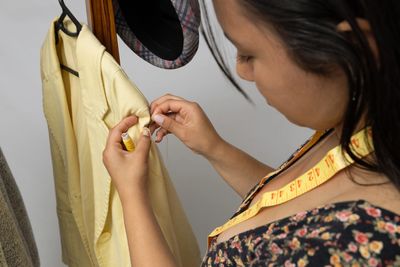
costume designer
Costume Designer’s Duties: Tech to Post-Production
With Examples & Best Practices
Butts Acting Guild
Pre-Production Duties
• Meet with Director and Stage Manager.
• Have at least 1 costume ready for each key cast member 3 weeks prior to show for publicity.
Technical & Dress Rehearsals
1. Finalize Costumes
• Ensure all costumes are fitted, finished, and labeled for each actor.
• Remember shoes, purses, jewelry, wigs, hats and any other accessories.
• Ask actors for any things they own that may work.
• Coordinate quick-change logistics with SM and crew.
Examples & Best Practices:
• Bring a sewing kit, safety pins, and fabric tape for emergencies.
• Label costume racks clearly by character/actor.
• Schedule time for actors to practice quick changes.
Performance Period
2. Maintain Costumes
• Supervise wardrobe crew and assist with pre-show prep.
• Repair costumes between performances as needed.
• Ensure consistency in actor appearance each night.
Examples & Best Practices:
• Keep a costume repair kit backstage.
• Check wigs, hats, and shoes nightly for wear.
• Post a costume plot for crew reference.
Post-Production
3. Strike & Restore
• Clean, repair, and store costumes.
• Return rented or borrowed items.
• Assist in restoring venue storage areas.
Examples & Best Practices:
• Inventory all pieces before return.
• Thank wardrobe volunteers personally.
• Note what worked and what didn’t for next show.
Summary
In community theatre, the Costume Designer is:
• The artist – creating looks that define character and story
• The organizer – managing fittings, repairs, and crew
• The problem-solver – handling wardrobe malfunctions quickly
Total Estimated Hours
≈ 70–110 hours per production
Typical Breakdown:
Smaller cast / modern show: ~70–85 hours
Large cast / period / musical: ~90–110+ hours
