Stage Manager
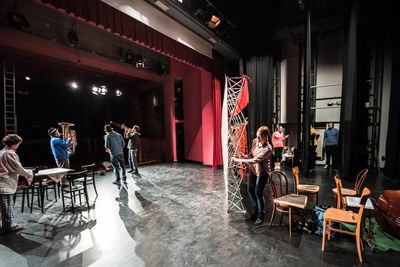
stage manager
Stage Manager’s Duties: Tech to Post-Production
With Examples & Best Practices
Butts Acting Guild
Pre-Production Duties
• Help at auditions.
Technical & Dress Rehearsals
1. Oversee Tech Integration
• Work with designers to coordinate lighting, sound, set, props, and costumes.
• Ensure actors, crew, and technicians know their cues and traffic patterns.
• Record all technical notes into the prompt book for reference.
Examples & Best Practices:
• Run a ‘cue-to-cue’ rehearsal to practice only entrances, exits, and cues.
• Keep clear communication with booth and backstage via headset.
• Stay calm—tech rehearsals are often the most stressful period.
2. Call and Run Rehearsal
• Set up stage for rehearsal (with assistance of cast).
• Give lines as needed.
• Keep a prompt book with detailed blocking notes.
• Call cues for lights, sound, and scene changes during runs.
• Maintain rehearsal pace and safety backstage.
• Give clear notes to crew and report issues to director or producer.
Examples & Best Practices:
• Use consistent, professional cue-calling language (e.g., 'Standby Lights 23… Lights 23, GO!').
• Have backup flashlights, spike tape, and first-aid kit nearby.
• Prepare for quick problem-solving (missing prop, late actor, cue misfire).
Performance Period
3. Run the Show
• Call all cues (lights, sound, projections, curtain, effects).
• Supervise crew and maintain backstage order.
• Ensure performances are consistent each night.
Examples & Best Practices:
• Start every show with a pre-show checklist (props set, actors signed in, crew ready).
• Stay professional under pressure—audience should never sense problems.
• Check in with house management before starting.
4. Handle Emergencies
• Make quick, safe decisions if something goes wrong.
• Communicate calmly with cast, crew, and audience if needed.
Examples & Best Practices:
• Have a protocol for fire alarms, power loss, or medical emergencies.
• Keep emergency contact info for cast and crew in your prompt book.
• If necessary, stop the show safely and restart smoothly.
Post-Production
5. Oversee Strike
• Supervise the breakdown of set, lights, costumes, and props.
• Ensure rented or borrowed items are returned.
• Assist with restoring venue to original condition.
Examples & Best Practices:
• Assign strike tasks before closing night so everyone knows responsibilities.
• Double-check dressing rooms, wings, and storage before leaving.
• Thank crew for their hard work—strike can be exhausting.
6. Provide Closure
• Participate in post-show debrief with cast/crew.
• Archive the prompt book for future productions.
• Celebrate the end of the run with the team.
Examples & Best Practices:
• Write a short SM report of lessons learned.
• Encourage cast/crew feedback for smoother future shows.
• Join cast party or recognition event to build morale.
Summary In community theatre, the Sound Director is:
• The engineer – ensures clarity and balance of sound
• The operator – runs cues with precision
• The troubleshooter – fixes issues quickly to keep the show running
Estimated total time commitment:
≈ 50–80 hours per production
